
Cross-Chain Staking Explained: How It Works in 2026

Imagine you have credit cards from two different banks, Bank A and Bank B, each with its loyalty program offering exclusive benefits.
Bank A offers cashback rewards for using its card for specific purchases. Bank B provides travel rewards points for transactions made with its card.
Now picture a third-party platform that lets you exchange Bank A’s rewards with Bank B’s and vice versa. This way, you can benefit from the combined rewards of both banks.
Through cross-chain staking, users can deposit their staking assets on one blockchain, receive rewards, and participate in activities on multiple chains. While it’s a new concept, developers have begun exploring it as more networks emerge.
In this article, we explore:
- What is cross-chain staking
- How does cross-chain staking
- The benefits and risks
…and many more.
Keep on reading!
What is Cross-Chain Staking?
Before discussing cross-chain staking, it is essential to tackle interoperability.
Most blockchains operate in isolation and use different languages and frameworks. Ethereum uses the ERC-20 token standard, while Bitcoin uses the BEP-20 token standard. Owning cryptocurrency on Ethereum does not enable direct transfer to networks like Bitcoin.
Developers cannot use the same language across networks. Similarly, users must choose which blockchain to leverage for their digital assets. This lack of interoperability hampers liquidity within the blockchain space.
What is Cross-Chain Interoperability?

Cross-chain interoperability refers to how different blockchains communicate, share data, and operate in a coordinated manner.
Cross-chain technology facilitates interoperability by acting as a bridge between two distinct blockchains. Cross-chain links allow users to move assets between different chains.
Transactions execute through smart contracts (self-executing code). These protocols secure your crypto assets in a pool and return an equivalent cryptocurrency compatible with the other network. This process is known as “wrapping.”
For example, Decentralized Finance (DeFi) primarily operates on Ethereum. Users from other networks become locked out of the full benefits of the DeFi space.
With a cross-chain bridge, you can wrap BEP-20 Bitcoin and transfer it to Ethereum as an ERC-20 Bitcoin. Then, you can use this Bitcoin throughout the Ethereum DeFi ecosystem.
How Does Cross-Chain Staking Work?

Cross-chain staking involves staking on one network (such as Ethereum) and receiving rewards on another (such as Solana). However, only a limited number of networks currently offer this natively.
Most cross-chain interactions occur via DeFi protocols, specifically liquid staking solutions.
Liquid staking is a process defined as follows:
1. Stakers deposit their cryptocurrency on a third-party liquid staking platform.
2. The deposited token is pooled and then used for network validation.
3. Stakers receive liquid staking tokens (LSTs) that are equivalent in value to their staked capital. These LSTs represent the staked assets in a blockchain network that provide liquidity.
4. Users can then transfer the liquid staking tokens to another blockchain, where they can use them for further yield-generating activities.
Through cross-chain liquid staking solutions, users fully participate in staking activities across two or more blockchains.
How Does Cross-Chain Staking Differ From Traditional Staking?
Cross-chain and traditional staking allow users to participate in the network’s operations and earn rewards by locking up their crypto assets. However, they differ in their mechanism and the networks involved.
Traditional staking, especially solo staking, entails a user staking and participating on a single network without relying on third parties. Cross-chain staking uses pooled staking and relies on smart contracts and DeFi applications.
What is an Example of Cross-Chain DeFi?
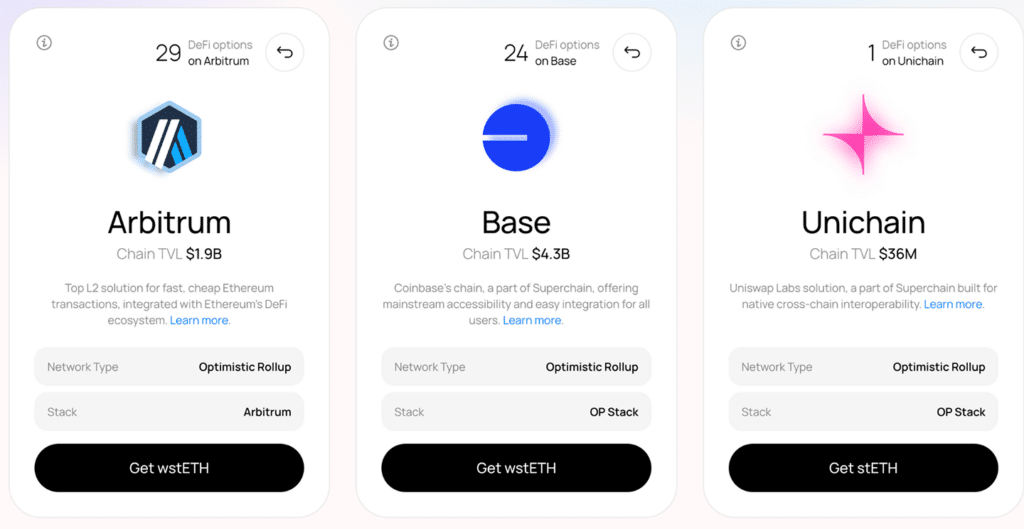
Lido Finance is the largest liquid staking platform. According to DefiLlama as of April 2026, Lido has over $21 billion in total value locked (TVL). Stakers deposit Ethereum and receive liquid staking tokens called stETH in return.
In April 2026, Lido supports one-click cross-chain staking to many Ethereum Layer 2 networks, such as Arbitrum, Base, and Unichain. Through a single click, you can easily bridge your ERC-20 ETH to stETH and receive your rewards in an L2 network.
Cross-Chain Staking Networks in 2026
Some networks have attempted to innovate the space by offering cross-chain staking rewards. A staker can stake tokens from a single network and get rewards across multiple chains.
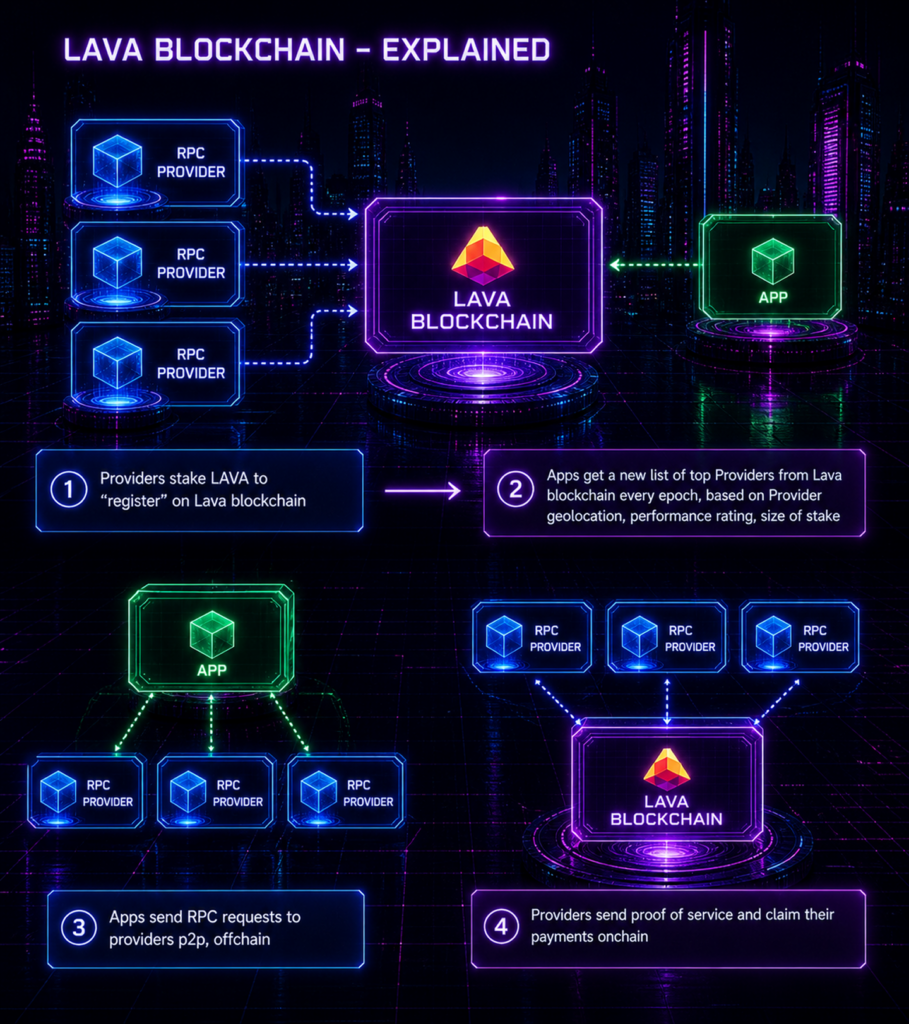
Lava Network is pioneering cross-chain staking by incentivizing users to stake their LAVA tokens to power the network and restake their LAVA to power RPC Node providers. When a Lava Network staker restakes their LAVA tokens with a Provider, they can earn cross-chain staking rewards on other networks such as Cosmos and Axelar.
RPC Providers power the data, which flows through blockchains. Meanwhile, restaking is a popular concept on Ethereum that allows users to use their staked assets to secure other blockchain projects.
What Benefits Does Cross-Chain Staking Offer to Crypto Investors?
Cross-chain technology offers several benefits that enhance the efficiency and functionality of decentralized ecosystems.
Here are a few benefits of cross-chain staking:
Optimized Returns
Users can maximize their digital assets by choosing the most rewarding yield opportunities across blockchains. Stakers can adapt to changing market conditions and select higher yields.
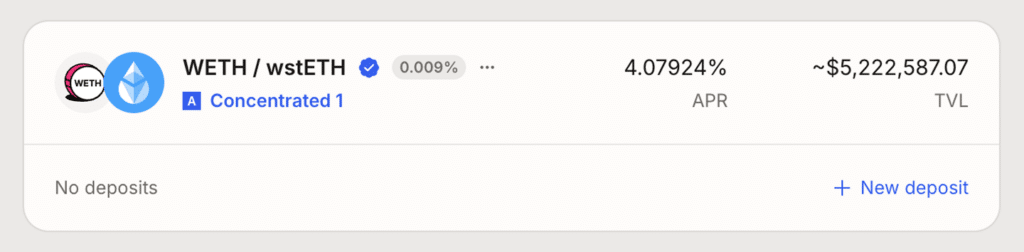
When you bridge stETH from Ethereum to Base, you can earn additional yield on top of your liquid staking returns.
As of April 2026, you can get over 4% APR by depositing WETH and wstETH into an Aerodome liquidity pool.
Enhanced User Control
Users have greater freedom and control over their crypto assets.
They can choose the blockchain that aligns with their preferences, risk tolerance, or investment strategy. Users can actively manage their assets and stake on multiple networks.
Risks Associated With Cross-Chain Staking
While cross-chain interoperability offers numerous benefits, it also entails risks and challenges.
Make sure to perform due diligence before engaging in cross-chain staking.
Security Risks
Interacting with multiple blockchains introduces various attack vectors. Security vulnerabilities in a single blockchain or in the cross-chain infrastructure could expose users’ assets to risk.
Furthermore, users must click through multiple sites to stake across blockchains. This process raises the risk of clicking on dubious sites and malicious links.
Make sure to use verified links or links directly from reputable sites like Lido.
Smart Contract Risks
Cross-chain staking involves using smart contracts to facilitate asset transfers and activities between blockchains. Smart contracts are vulnerable to coding errors and exploits that could lead to financial losses.
In February 2022, Wormhole Bridge (one of the more popular cross-chain bridges between Solana and Ethereum) experienced a security exploit that resulted in $321 Million in losses. A hacker minted millions worth of wETH on Solana and then redeemed it for ETH on Ethereum, as well as other tokens.
The hack was the then-second-largest DeFi attack in history.
Market Size of the Cross-chain DeFi Ecosystem
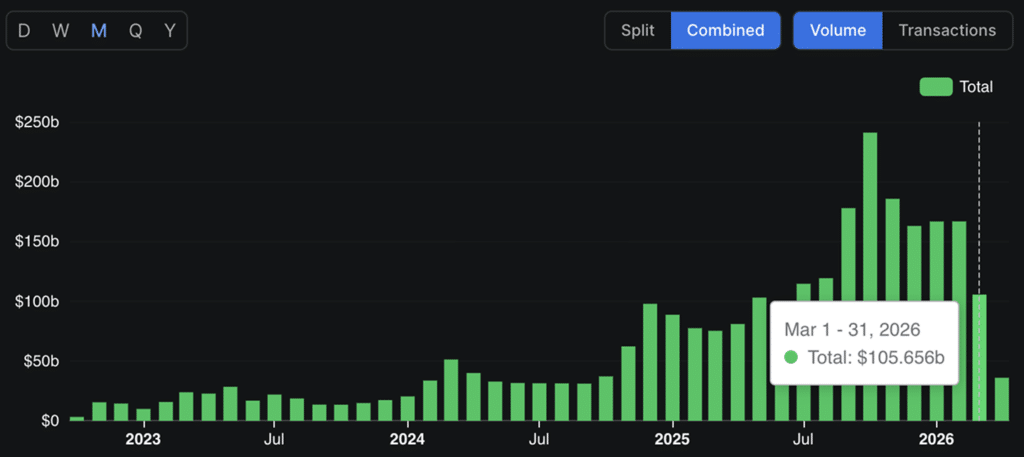
Cross-chain DeFi has mostly recovered since the market lows in May 2022.
According to DefiLlama, as of April 2026, popular bridges such as Wormhole have attracted over $1.6 Billion in TVL. Meanwhile, as of March 2026, monthly bridge volume reached $105 Billion.
Conclusion
Cross-chain staking has the potential to reshape the landscape of decentralized finance. Imagine an interconnected blockchain industry where users can freely diversify digital assets and capitalize on opportunities across multiple blockchains.
As with any innovation, there will be risks. More recent security incidents have revealed that users must approach with cautious optimism and exercise operational security at all times.
While hurdles may lie ahead, the transformative promise of a cross-chain blockchain world keeps the industry wide-eyed with high expectations.
Frequently Asked Questions
What happens to my tokens if a cross-chain bridge fails?
If a bridge is exploited, the collateral backing your tokens could be drained, causing your “wrapped” assets to lose their value. Use reputable bridges to mitigate the risk of your digital assets becoming unbacked.
How long does cross-chain staking take compared to regular staking?
Cross-chain staking takes a little longer because it requires additional steps to bridge and wrap assets across different networks. While regular staking is near-instant, bridging can add several minutes depending on network conditions and security confirmations.
Do I pay gas fees on both chains when cross-chain staking?
Yes, you typically pay a fee on the source chain to lock your assets and another on the destination chain to receive them. Many users choose to bridge to Layer 2 networks specifically to reduce ongoing transaction fees.
Is cross-chain staking worth it for small holders?
The high gas fees of bridging can often outweigh the yield earned on smaller balances, making it less efficient for minor positions. Small holders may find better value by staking directly on low-fee Ethereum Layer 2 networks or using exchange-based solutions.
Editor’s Note: This article was originally published in March 2024 but has been updated with new information
The content of solostakers.com is for informational purposes only and should not be considered financial advice. It represents the personal views and opinions of the author(s) and is not endorsed by any financial institution or regulatory body. Cryptocurrency and staking investments carry inherent risks and readers should conduct their own research and consult with a financial professional before making any investment decisions. The owner and author(s) of solostakers.com will not be liable for any losses, damages, or consequences arising from the use of the information on this site. By accessing solostakers.com, you agree to bear full responsibility for your investment decisions.

March 1, 2024
May 7, 2026


