
What is the Best Crypto Staking Strategy in 2026?

It’s 2026, and there are so many options for generating staking returns.
Between native staking, liquid staking tokens (LSTs), complex restaking protocols, and automation layers, the barriers to entry have completely collapsed.
To stake or not to stake? That is no longer the question. The real question is: which crypto staking strategy will protect your capital while maximizing returns?
Treating staking as a static activity leads to underperformance. To survive and thrive in today’s market, you need a proactive crypto staking strategy.
This guide breaks down how to arrive at the best staking strategy:
- Basic staking strategies
- Advanced tactics to beat the native network yield
- Execution plans tailored to your preferences
…and more.
Keep on reading.
Know the Basic Staking Options
Before building a customized strategy, you must understand the trade-offs of the foundational choices available today.
Solo Staking
With solo staking, you run an independent validator node on a network like Ethereum or Solana. It’s the purist’s route, but the least accessible for non-technical holders. Spinning up an independent Ethereum validator requires a minimum of 32 ETH (roughly $65,000 based on mid-2026 market prices)
You get the most secure setup by removing third-party applications and smart contracts. However, the capital requirements and technical maintenance make it unfeasible for the average staker.
Furthermore, cutting out intermediaries doesn’t guarantee more yield. You still have to execute your own optimization strategies manually.
Delegated Staking
Delegated staking is the go-to method for stakers on DPoS networks such as Cosmos and Solana.
You retain full custody of your crypto while delegating your stake to a professional validator. In return, you receive network rewards minus a small commission.
The absence of hardware complexities and capital-entry barriers makes it accessible. However, it exposes you to the “Inertia Tax.” If your chosen validator changes its terms, drops offline, or degrades in performance, your staking returns collapse until you manually redelegate.
Liquid Staking
Liquid staking allows you to deposit native tokens into a protocol (like Lido) in exchange for a liquid staking token (LST), such as stETH. This method enables you to earn staking rewards while keeping the underlying asset liquid for trading or deployment across DeFi.
Liquid staking maximizes capital efficiency by unlocking trapped liquidity. The catch is that it introduces smart-contract risk. If the protocol’s minting or bridge architecture is compromised, your principal can evaporate instantly.
Pooled Staking
Originally built to help smallholders bypass the 32 ETH requirement, pooled staking has expanded to Delegated Proof-of-Stake networks. Most retail users execute this by clicking “Stake” inside a centralized exchange such as Binance.
While convenient, you surrender custody of your assets and lose out on yield. Based on Coinbase’s May 2026 staking guidelines, the platform charges a standard 35% commission.
Advanced Tactics to Maximize Staking Rewards
To maximize staking rewards, you have to look beyond basic staking. While not exhaustive, you can upgrade your strategy through hygiene practices, yield stacking, and automation.
General Staking Hygiene
Many stakers can save significant capital and generate higher returns by actively managing and auditing their existing positions.
Monitoring News
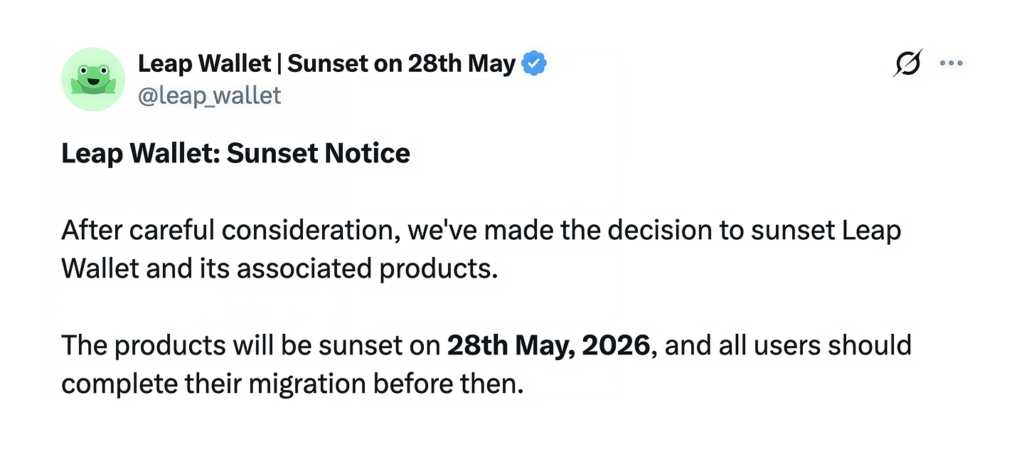
In April 2026, the major Cosmos ecosystem wallet, Leap, announced it would completely sunset its application and native Cosmos validator by May 28, 2026.
Stakers who left their portfolios unmonitored stopped earning rewards entirely the moment that the infrastructure went dark. Staking is not passive. You must stay up to date on events.
Avoiding High Commission Validators
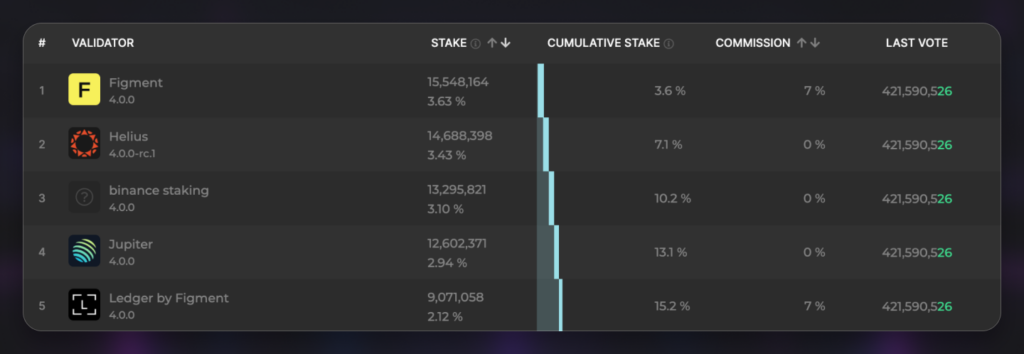
Avoid picking a validator because they have the loudest brand presence or the highest delegations. Large brands leverage their market share to charge higher commissions.
Look further down the active set for highly reliable, independent validators that run lower-commission structures.
Based on Solana Beach data for May 2026, Figment, the top validator, charges a 7% commission. You can stake with Helius, Binance, and Jupiter and experience commission free staking.
Advanced Yield Strategies
Advanced stakers deploy additional staking mechanics on top of their core assets. These methods scale returns while adding to your risk surface.
Restaking

With restaking, you can use your already-staked assets to secure secondary data layers or bridges. Popular protocols like EigenLayer or Babylon boost your returns. However, it introduces even more slashing and smart contract risks.
In April 2026, KelpDAO, an Ethereum liquid restaking protocol, got hacked for $292 million through its bridge.
Programmatic Vaults
Staking vaults use smart contracts to route assets through lending and other yield protocols. While vaults can generate high returns, they often appear as a financial “black box.” An average investor may find it difficult to understand the source of yield and the risks involved.
As a spillover from the KelpDAO incident, Lido’s EarnETH vault paused redemptions because it held exposure to rsETH, KelpDAO’s liquid restaking token.
Liquid Looping Strategies
This process involves taking a liquid staking token (LST), depositing it into a DeFi protocol, borrowing the native asset (like ETH), and staking it again to mint more LSTs. You repeat the steps several times, causing a loop.
Aside from smart contract risk, you could get liquidated if the LST’s price depegs from the native token.
In May 2022, Terra Luna (LUNA) wiped out $60 billion in crypto market value. Liquid looping helped increase the protocol’s value. Users would take the LUNA token, deposit it for UST (a stablecoin), and loop for more yield.
Allocation Intelligence
If you want yield optimization from advanced DeFi strategies without additional risks, Allocation Intelligence is a great alternative.
Automated solutions like Polli act as a non-custodial allocation layer. You establish your operational boundaries, such as commission caps and decentralization rules. The system then automatically manages the compounding and validator rebalancing loops directly out of your native wallet permissions.
You capture the efficiency of an actively managed staking strategy while keeping your assets under your control.
How to Build Your Crypto Staking Strategy
A successful strategy does not chase the highest APY. It considers a multi-step process. Read through our tips to get started.
Step 1: Define Your Capital Goals and Risk Tolerance
Are you looking for extra returns at the expense of losing your entire balance? Or are you looking to generate optimal returns on crypto assets in the long term?
The higher your risk tolerance, the more advanced staking strategies you can deploy.
Step 2: Choose the Right Blockchains to Stake On
We all get enticed by double-digit staking yield. But a network offering a 20% staking yield is worthless if its token price goes to zero.
Focus on sustainable ecosystems with network activity and institutional interest. Diversifying across high-quality chains ensures that an exploit on one chain won’t freeze your entire portfolio.
To evaluate your options, check out our deep dive on the best crypto to stake in 2026.
Step 3: Pick Your Staking Method
Match your comfort level with the options above. If you aren’t well-versed in DeFi or wallet security and you’re afraid of smart contracts, then there’s no need to take on additional staking activities.
For the less risk-averse, you can generate excess returns while maintaining asset ownership. Native staking or intelligent allocation options allow you to achieve this.
Step 4: Conduct Due Diligence
Don’t just study validators for their uptime and fees. Audit websites, platforms, and teams that you’ll be interacting with. A brief check on the people behind these platforms can go a long way.
Simple checks on how frequently the teams communicate with their users, as well as their track records, can expose people to risks.
Step 5: Map Your Liquidity Needs
Always maintain an emergency exit plan in case things go wrong.
It goes without saying that you should never go all in on a single network or platform. Beyond that, understand how long it will take you to recover your capital if the market turns or macroeconomic conditions shift.
Putting Together the Right Staking Strategy
The best strategy isn’t a one-size-fits-all formula. It depends on your personal preferences, time availability, and risk tolerance.
Whether you prefer the total control of manual delegation or the hands-free security of an automated non-custodial engine like Polli, the core rule remains the same:
Choose a non-custodial strategy that can deliver good returns without taking on too much risk.
Frequently Asked Questions
What is the best crypto staking strategy for beginners?
Beginners can stake through a reputable native wallet. This method lets them learn the basics of staking while maintaining custody.
Is crypto staking still worth it in 2026?
Yes, especially if you holding crypto assets long term. Staking helps your assets from being diluted by network inflation.
Should I diversify my staking across multiple blockchains?
Yes. Diversifying your assets helps protect your capital from network halts and protocol exploits.
The content of solostakers.com is for informational purposes only and should not be considered financial advice. It represents the personal views and opinions of the author(s) and is not endorsed by any financial institution or regulatory body. Cryptocurrency and staking investments carry inherent risks and readers should conduct their own research and consult with a financial professional before making any investment decisions. The owner and author(s) of solostakers.com will not be liable for any losses, damages, or consequences arising from the use of the information on this site. By accessing solostakers.com, you agree to bear full responsibility for your investment decisions.

May 31, 2026
June 2, 2026


