
Auto-Staking vs. Manual Staking: What’s the Best Staking Method?

In crypto, time is money, but so is effort.
Every staker eventually hits a wall where manual button-clicking starts to feel like a second job. Yet, choosing between auto-staking and manual staking isn’t just about convenience.
When you take a closer look, manual staking resembles passive staking, leaving your assets static and unable to respond to the ever-changing market dynamics.
On the flip side, auto-staking transforms your deployment into an actively managed position, using technology that responds in real time to market changes. This choice ultimately dictates your staking returns and the long-term security of your crypto assets.
In this guide, we’ll break down the practical differences to help you decide which method fits your portfolio:
- Brief recaps of auto-staking and manual staking
- Key differences between the two staking methods
- Pros and cons of each
- Which staking method should you choose
…and more.
Keep on reading!
The Basics: Manual and Auto-Staking
Manual Staking
Manual staking is the standard practice.
If you’ve ever staked crypto in a wallet like Keplr or Phantom, you know the drill: log in, browse through hundreds of validators, delegate your crypto, and hit stake.
But the real work begins when you want to maximize your rewards. While some networks like Solana offer native auto-compounding features, others, such as Cosmos, do not.
When it’s time to earn yield on those rewards, you must manually claim them and then delegate them back to a validator.
Auto-Staking
Auto-staking crypto uses platform features, tools, or smart contracts to do the manual work for you.
Some tools find you the best staking yields by selecting validators, compounding rewards, and automatically redelegating.
Ironically, while this type of staking sounds like a passive “set-and-forget” strategy, it’s anything but. Auto-staking turns your deployment into an actively managed position that continuously responds to real-time market dynamics.
APR vs. APY: Why the Math Matters
To understand why your choice of staking method matters, look at the difference in returns:
- APR (Annual Percentage Rate): What you get if you never reinvest your staking rewards.
- APY (Annual Percentage Yield): What you get when you compound returns.
On a high-yield network like Cosmos, the gap between APR and APY can turn massive.
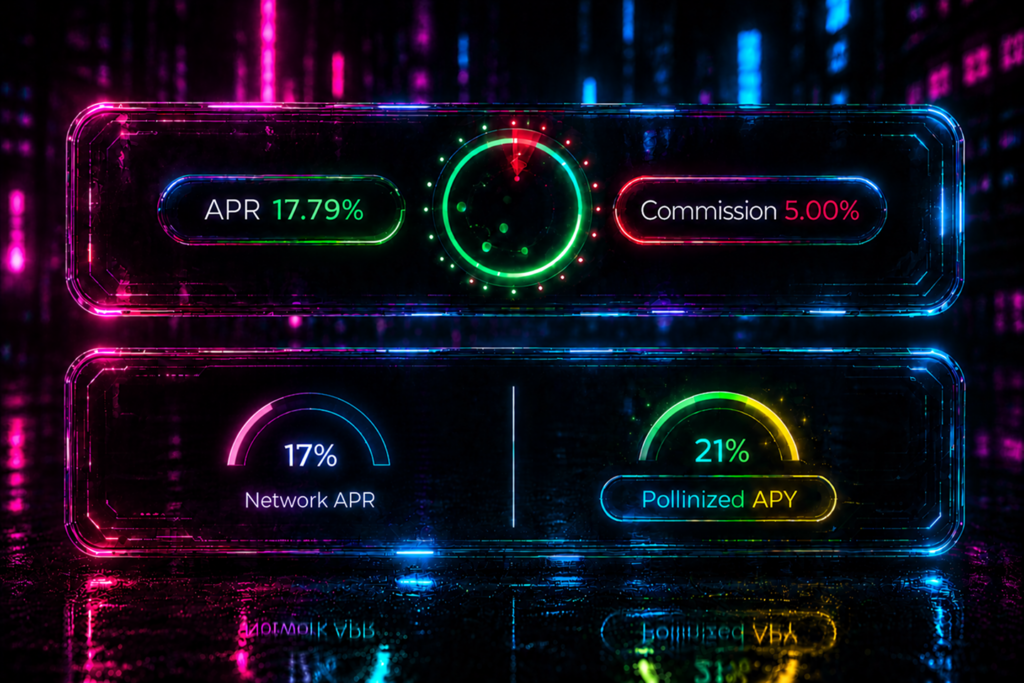
Based on May 2026 calculations from Polli.co, an intelligence allocation layer, you can capture a 21% APY compared to a 17% network APR. Over 12 months, that 4% difference can mean dozens of extra tokens added to your stack.
Taking Things Further: Intelligent Allocation
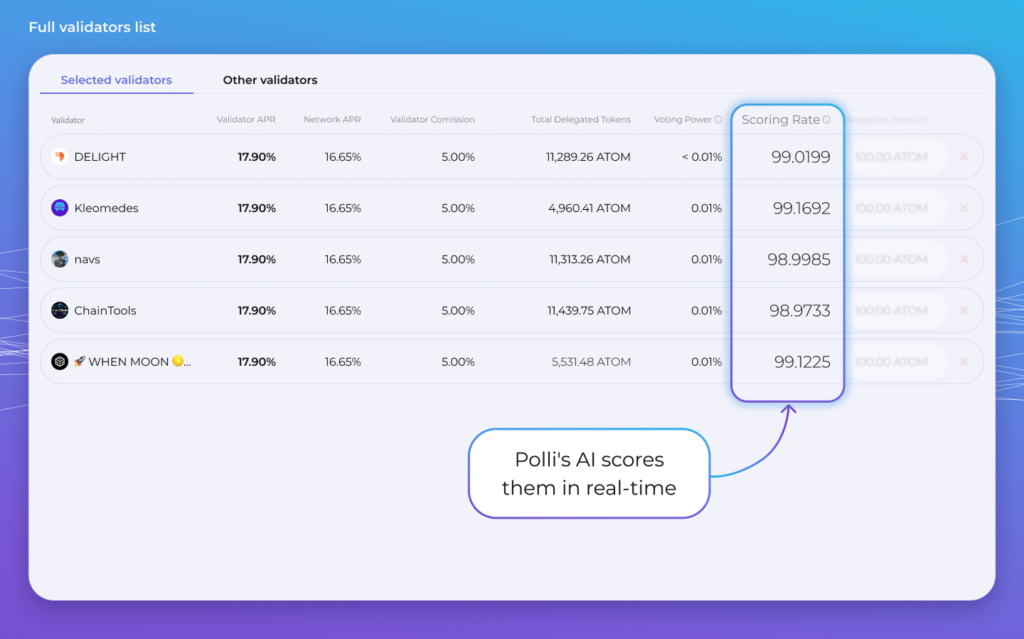
If you’ve outgrown the manual click-and-claim routine but are wary of the simple automation found in basic auto-staking tools, there is a middle ground: Intelligent Allocation.
Polli serves as the brain of your staking strategy, translating your goals into a clear, automated allocation policy. You define your parameters, such as commission caps, uptime requirements, or decentralization targets, and the system handles the execution.
Whether you are deploying across networks like Cosmos, Lava, Solana, or Bitcoin (via Babylon), the system continuously monitors your validators. If an operator drifts into poor performance, suffers downtime, or hikes fees, Polli pre-emptively rebalances your stake to a healthier position.
Because the architecture is strictly non-custodial, you maintain 100% ownership of your keys and assets while your portfolio benefits from professional-grade precision.
The Pros and Cons of Manual Staking
Manual staking is great for users who like to stay in the driver’s seat. It gives you total control over your liquidity and your validator choices.
The downside is that with greater power comes greater responsibility and decision-making. While you “think” you are in control, at some point the available options and data become too much for a human to process, leading to a loss of actual control.
Ultimate Control
You decide when to move your funds. If you want to take your yield and spend it on coffee, you can claim it without unbonding your main stack.
Control extends beyond when you spend your assets.
Before committing your assets, you decide which validators to delegate to. You can spread your stake across multiple validators to decentralize the network or go all-in on the one with the best marketing.
The “Least Risky” Option
Most of the interaction takes place between you and your wallet.
This simplicity means you do not need to connect to additional tools or websites, nor grant permission for transactions you do not understand. By stripping away third parties, you reduce your overall risk surface.
Paradox of Choice
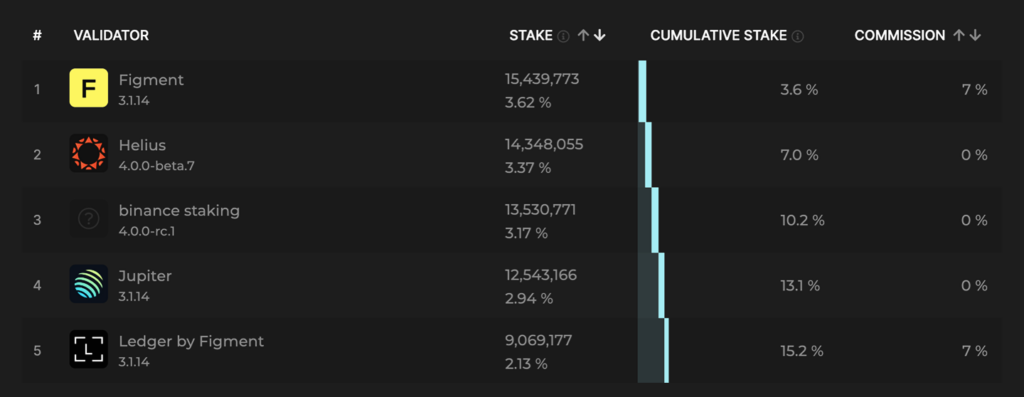
According to Solana Beach data as of May 2026, Solana has 769 active validators. With so many options, you can get lost in the process of selecting the right one.
How do you even know what criteria to base your selection on? Do you prioritize returns over decentralization? Brand names versus performance?
Then you need to determine when to claim and compound your returns. You’ll have to decide how often to claim rewards. Compounding could cost more in gas than you earn in extra yield, eating into your gains.
When the data and decisions become overwhelming for the human mind, manual stakers will eventually underperform automated solutions.
The Forgetfulness Penalty
Taking full control of your assets sounds cool until life gets busy.
If you forget to monitor your validator and it goes offline, you stop earning rewards. Similarly, if you skip compounding periods, your potential rewards diminish.
Auto-Staking Benefits and Risks
Auto-staking is built for holders who want to maximize growth with minimal effort.
However, the various auto-staking tools and platforms pose different risks. Make sure to do due diligence before committing assets.
Maximum Risk-Adjusted Returns
By selecting the right validators and compounding at optimal intervals, auto-staking ensures you’re achieving the highest possible APY.
Auto-staking tools can also protect you from possible downsides. They can detect that a validator’s performance is deteriorating. Then, they will redelegate your stake, protecting you from possible downsides.
Set and Forget
You don’t need to set a calendar alert to log in to your wallet. The platform and tools do most of the work for you. Most of your work happens at the start when you grant the necessary permissions and sign transactions to authorize the tools.
Your staked assets grow while you sleep.
Permissions and Smart Contracts
When you utilize auto-staking tools, you are granting a third-party application permission to claim, redelegate, and stake on your behalf. However, it is vital to understand how these tools perform those actions, as the underlying architecture can change your risk profile.
Many automated and liquid staking platforms rely on smart contracts to pool and route assets. This architecture presents code or infrastructure vulnerabilities.
In April 2026, Kelp DAO suffered a $292 million exploit on its cross-chain bridge architecture, causing billions to panic-exit the broader DeFi ecosystem. This incident proved that relying on complex protocol code introduces severe attack vectors.
These risks are where a different class of automation comes into play. Platforms like Polli lower your risk profile by operating without smart contracts. Instead of pooling your tokens in a vulnerable, shared contract, Polli uses native blockchain permission modules from networks like Cosmos and others.
Custodial Risk
Not all auto-staking tools and platforms are the same.
While auto-staking platforms such as Polli and Lido offer non-custodial services, centralized exchanges such as Coinbase take custody of your assets. Should the exchange go down or get hacked, you could lose your entire balance.
Head-to-Head Comparison
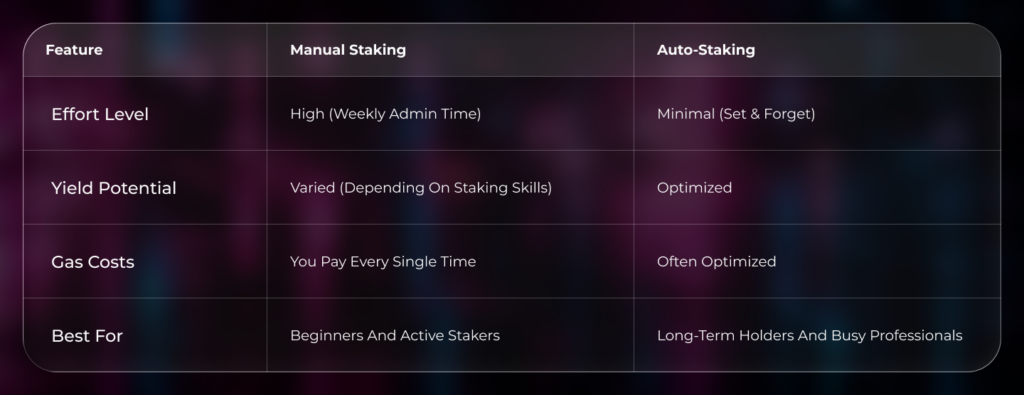
When to Use Manual Staking
Manual staking is for active stakers and beginners.
When you’re at the beginning of your staking journey, your risk tolerance may be low. Furthermore, you may still be learning more about the staking process. Doing everything yourself, even if tedious, is a great way to learn about the ins and outs of staking.
Never mind the lower returns. What matters is the knowledge.
Active stakers can also perform manual staking, especially if they feel they have an edge or a way to generate high yield.
Who Auto-Staking is For
Choose auto-staking if you find yourself forgetting to claim and restake your rewards for weeks at a time. Not everyone needs to live in spreadsheets, trying to extract as much return as possible.
If you’re a long-term holder seeking maximum possible snowball growth, then auto-staking may also be for you. Highly talented teams manage these staking platforms and tools. They know how to provide the best risk-adjusted returns for their customers (most of the time).
Choose Active Management for Staking
As your portfolio grows, relying on manual click-and-claim turns your deployment into a passive, static position, leaving you highly vulnerable to market inertia, validator fee hikes, and missed compounding.
If you are ready to switch to auto-staking without exposing yourself to the vulnerabilities highlighted in numerous smart contract exploits, a non-custodial solution like Polli offers the best of both worlds. By setting an intelligent allocation policy, you maintain absolute ownership of your keys while enjoying an automated system that proactively rebalances your portfolio for optimal performance.
Don’t let your rewards sit idle on the table.
The market moves fast. Make sure your staking strategy keeps pace.
Frequently Asked Questions
Does auto staking earn more rewards than manual staking?
Yes, auto-staking generates higher yields because it captures the snowball effect of compound interest at a frequency that is difficult to maintain manually.
What are the risks of auto-staking?
The primary risks include potential vulnerabilities in the automation tool’s smart contracts.
Does auto-staking charge fees?
Most platforms charge a small commission on the overperformance they generate.
What happens to my rewards if I forget to manually restake?
If left uncollected, your rewards remain pending and do not earn additional interest.
Which blockchains support auto-compounding natively?
While networks like Solana offer native compounding features, many others, such as Cosmos and its ecosystem, rely on third-party layers or intelligent allocation tools to handle redelegation.
The content of solostakers.com is for informational purposes only and should not be considered financial advice. It represents the personal views and opinions of the author(s) and is not endorsed by any financial institution or regulatory body. Cryptocurrency and staking investments carry inherent risks and readers should conduct their own research and consult with a financial professional before making any investment decisions. The owner and author(s) of solostakers.com will not be liable for any losses, damages, or consequences arising from the use of the information on this site. By accessing solostakers.com, you agree to bear full responsibility for your investment decisions.

May 21, 2026
May 21, 2026


