
Staking 2.0: AI-Driven Yield Optimization

When crypto staking first emerged, stakers and long-term holders hailed it as the ultimate passive-income strategy.
Invest in and stake your favorite cryptocurrencies, earn yield, and wait for prices to rise.
However, as the crypto ecosystem has grown more complex, that “passive” dream has started to feel like an active sideline. In some cases, stakers treat it as a full-time job.
The modern staker is overwhelmed by choices and maintenance. You have to study and weigh the pros and cons of liquid staking tokens (LSTs), restaking, and filter through hundreds of different validators,
Thankfully, a new class of staking is emerging with Artificial Intelligence powering it.
AI innovation is transforming staking from a manual chore into an autonomous, optimized experience.
We’re at the dawn of Staking 2.0.
Read our article and learn about:
- A brief recap on traditional staking
- What is Staking 2.0 all about
- How AI is optimizing staking
…and much more.
Traditional Staking 1.0: The Manual Approach
To understand where we are going, let’s recap where we have been.
Networks like Solana and Cosmos require you to delegate your tokens to a validator. You can set up your own validator and perform solo staking on Ethereum, but you’ll face significant capital and technical barriers.
In exchange for securing the network, the validator earns rewards and passes them on to the delegator.
In this manner, you traditionally earn staking rewards.
While simple in theory, Staking 1.0 possesses many human friction points.
The Challenges of Human-Led Staking
As a staker, your manual workload includes:
Validator Selection
Who do you delegate your hard-earned crypto to? You have to sift through hundreds of validators and research commission rates, uptime, voting power, and other factors.
The Compounding and Challenge
To maximize returns in networks like Cosmos, you must manually claim rewards and restake them.
You’ll have to weigh between the size of your staking rewards and the costs to compound. Gas fees eat your profits, and missed opportunities reduce your compounded returns.
Constant Monitoring and Optimization
Validators can go offline. If you aren’t watching, your staking yield can drop. In January 2026, the team at Polli.co, a staking optimization platform, found that 85M Lava Network tokens, roughly 40% of the circulating token supply, were delegated to inactive validators and providers.
The Staking 1.0 Toolkit
To address the complexities of manual staking, the industry developed several tools. While these represent an upgrade, they are often incomplete or introduce more risks into native staking.
Dashboards
Crypto staking dashboards provide clarity by consolidating assets into a single interface. They offer real-time rewards tracking, APY visibility, and validator data. However, the dashboard only identifies the problem (like a validator going offline). You need to log in and manually fix it.
Liquid Staking
Liquid staking platforms like Lido rose to popularity by solving the unbonding period and token lock-up problems. Liquid staking also eliminates the need to select and monitor validators, as the platform handles it for you. However, you sacrifice native security for smart contract risk. If a bad actor exploits the LST protocol or the token de-pegs, your staked assets would be at risk.
Restaking
Protocols like EigenLayer allow you to stack yield by using your staked assets to secure additional applications. You earn more and optimize your yield. But this effectively leverages your crypto using new technology that has yet to go through the ups and downs of the crypto market.
What is Staking 2.0?
If Staking 1.0 was about tools that give you advice and or attempt to strip away inefficiencies, Staking 2.0 is about systems that take action for you.
The AI boom has transformed the crypto ecosystem into a place where software doesn’t just wait for your click; it executes your intent autonomously.
We are moving into an era of automation and AI Agent-led finance.
Polli: Pioneering Staking AI Agents
While new frameworks provide tools for building on-chain AI Agents, platforms like Polli directly develop and deploy AI Agents to address staking inefficiencies.
Polli has deployed specialized AI staking agents that take these agentic capabilities and focus them entirely on native staking yield optimization. This approach addresses the many challenges of human-led staking while mitigating the risks introduced by newer staking methods such as liquid staking and restaking.
Furthermore, the platform bridges the gap between the complex data displayed on a dashboard and the execution of a high-yield strategy across networks such as Cosmos, Lava, and Osmosis.
How Polli’s AI is Optimizing Yield
Polli’s AI isn’t a simple automation script; it’s a dynamic evaluator that never sleeps.
You can take advantage of Polli today through the Solo Stakers staking dashboard or directly through Polli’s website.
Here is how it solves human friction points of traditional staking and paves the way for Staking 2.0
Intelligent Validator Scoring
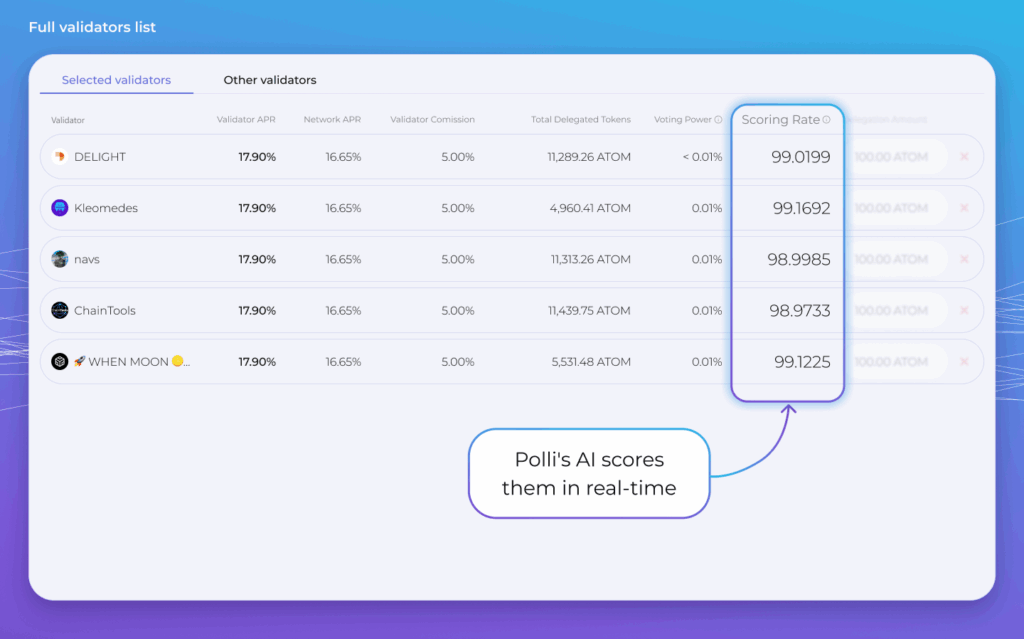
Instead of you scrolling through hundreds of validators, Polli’s AI scores them in real-time.
It doesn’t just look at the highest APR; it filters for trust and reliability. It analyzes historical uptime, slashing risks, and commission structures. The AI ensures your assets are always with top-tier providers. It also actively supports network health by avoiding “over-concentrated” validators.
Optimized Compounding
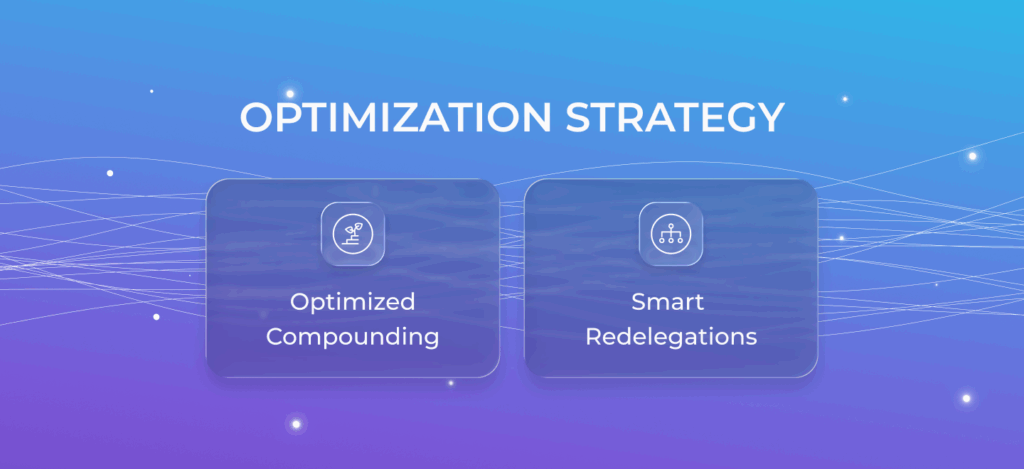
Compounding is a math problem that changes frequently. You need to weigh the size of your staking rewards and the gas fees.
Polli’s AI calculates and executes the optimal frequency at which the gains from exponential interest perfectly offset the cost of gas. It executes this restaking automatically, ensuring you never leak yield because you are offline.
Predictive Redelegation
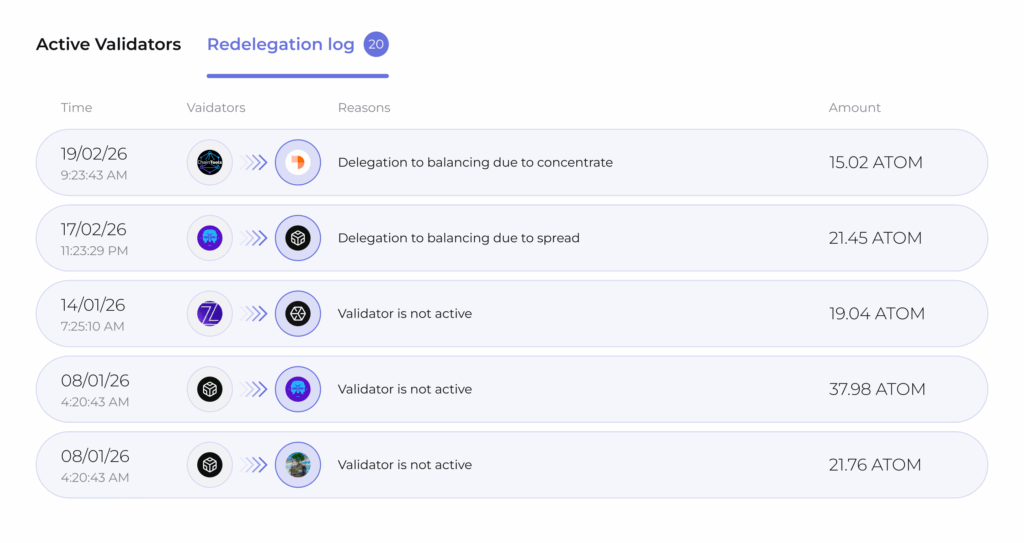
If a validator shows signs of instability or signals a commission hike, Polli doesn’t wait for you to read a tweet about it. The AI agent detects the on-chain anomaly and proactively redelegates your tokens to a healthier provider.
In Staking 2.0, your tokens never stay in an underperforming validator. They move with the market to provide you with the highest staking returns.
Coinbase AgentKit and x402
While organizations like Polli provide AI agent-driven staking solutions, other organizations are providing the frameworks and tools to create your own AI agents.
Coinbase, a leading cryptocurrency exchange, helped pioneer this new frontier through AgentKit. This new framework provided developers with a way to equip AI agents with full on-chain skills. These important functions included holding funds, swapping tokens, and staking cryptocurrencies, among other things.
This framework further pushed the boundaries in 2026 with the release of Agentic Wallets, giving AI Agents their own wallets.
The x402 protocol lies at the center of this shift. x402 utilizes the HTTP 402 “Payment Required” status code and allows machines to pay other machines instantly using stablecoins like USDC.
The Dawn of Staking 2.0
The transition from Staking 1.0 to 2.0 represents a shift in how we interact with the blockchain. We are moving away from being manual operators of our own wealth and toward becoming architects of automated strategies.
By leveraging AI Agent frameworks and deploying specialized staking platforms like Polli, stakers can bring out the best returns on their assets.
In an environment where every basis point counts, leaving your staking to human reaction time is an expensive choice. Staking 2.0 ensures that your capital is always in the right place, at the right time, earning the highest possible risk-adjusted return.
FAQs
What is Staking 2.0?
Staking 2.0 uses autonomous AI agents to manage the staking lifecycle, replacing manual human intervention with real-time, data-driven execution. It leverages machine-to-machine payment protocols to automate validator selection, redelegation, and reward compounding.
Is AI staking only for large institutional operators, or can retail stakers benefit?
Both benefit, but retail stakers gain institutional-grade oversight that would be impossible to maintain manually. AI agents ensure that even smaller allocations are compounded and protected with 24/7 precision.
How much additional yield can I realistically expect from AI optimization?
While results vary by network, Polli’s AI optimization typically captures 15% to 30% more yield than unmanaged native staking. This increase comes from eliminating inefficiencies like poor compounding timing and high validator commissions.
Can AI help prevent slashing?
AI agents may help prevent slashing. Agents monitor validator health signals in real-time and can detect underperformance before a human would. This system proactively re-delegates your tokens to a healthy provider before a slashing event occurs.
The content of solostakers.com is for informational purposes only and should not be considered financial advice. It represents the personal views and opinions of the author(s) and is not endorsed by any financial institution or regulatory body. Cryptocurrency and staking investments carry inherent risks and readers should conduct their own research and consult with a financial professional before making any investment decisions. The owner and author(s) of solostakers.com will not be liable for any losses, damages, or consequences arising from the use of the information on this site. By accessing solostakers.com, you agree to bear full responsibility for your investment decisions.

February 26, 2026
March 3, 2026

